Can a Non-US Resident Open a US Business Bank Account? Requirements for Foreign-Owned LLCs (2026)
Yes—depending on the provider and applicant. A non-US resident may be able to open a US business account for a properly formed US LLC, including through providers with remote onboarding. But an LLC and EIN do not guarantee approval. The provider may also assess the owner’s residence and identity, company addresses, business activity, expected transactions, source of funds, industry and its own compliance criteria.
The practical question is not only whether a foreigner may own a US LLC. It is whether the company and owner qualify for a suitable bank, fintech or financial provider.
Table of Contents
- What Counts as a US Business Bank Account?
- Do You Need to Live in or Visit the United States?
- The Four Gates Between LLC Ownership and Account Approval
- What Do Non-Resident LLC Owners Usually Need?
- Which Address Does a Provider Need?
- How Do Mercury, Wise Business and Relay Differ?
- Common Application Gaps
- A Practical Application Sequence
- Frequently Asked Questions
- Check Your Banking Readiness Before You Apply
- Sources and Freshness
What Counts as a US Business Bank Account?

Founders often use “US bank account” for different products, although their structures, features and onboarding rules differ.
| Provider type | What it generally means | Practical point for a non-US founder |
|---|---|---|
| Traditional US bank | Deposit account held directly at a chartered bank | Branch service may be available; remote onboarding can be limited or require a visit. |
| Online financial platform with partner-bank services | Fintech interface with underlying services from one or more partner banks | Online applications may be available, subject to platform and bank rules. |
| Multi-currency or payment account | International payments, currency balances and sometimes local receiving details | USD details can serve some uses without being a separate traditional bank account. |
Start with the required function: ACH receipts, wires, cards, currency conversion, processor payouts, checks, cash deposits or lending. USD details may solve one use case without providing every bank feature.
If Stripe payouts are part of the plan, confirm that the account details and account holder information are compatible with the intended Stripe setup. Our US LLC for Stripe guide covers that separate question.
Do You Need to Live in or Visit the United States?
You do not generally need to live in the United States to own a US LLC. Banking is separate. Some remote-first providers accept online applications from owners in eligible countries, using document uploads, identity checks and follow-up questions. Traditional banks may require an authorized signer at a US branch.
A trip is not always required, but remote opening is not universal. Before traveling, ask the specific branch whether it will consider your entity, residence, ID and addresses. A visit still does not guarantee approval.
The Four Gates Between LLC Ownership and Account Approval
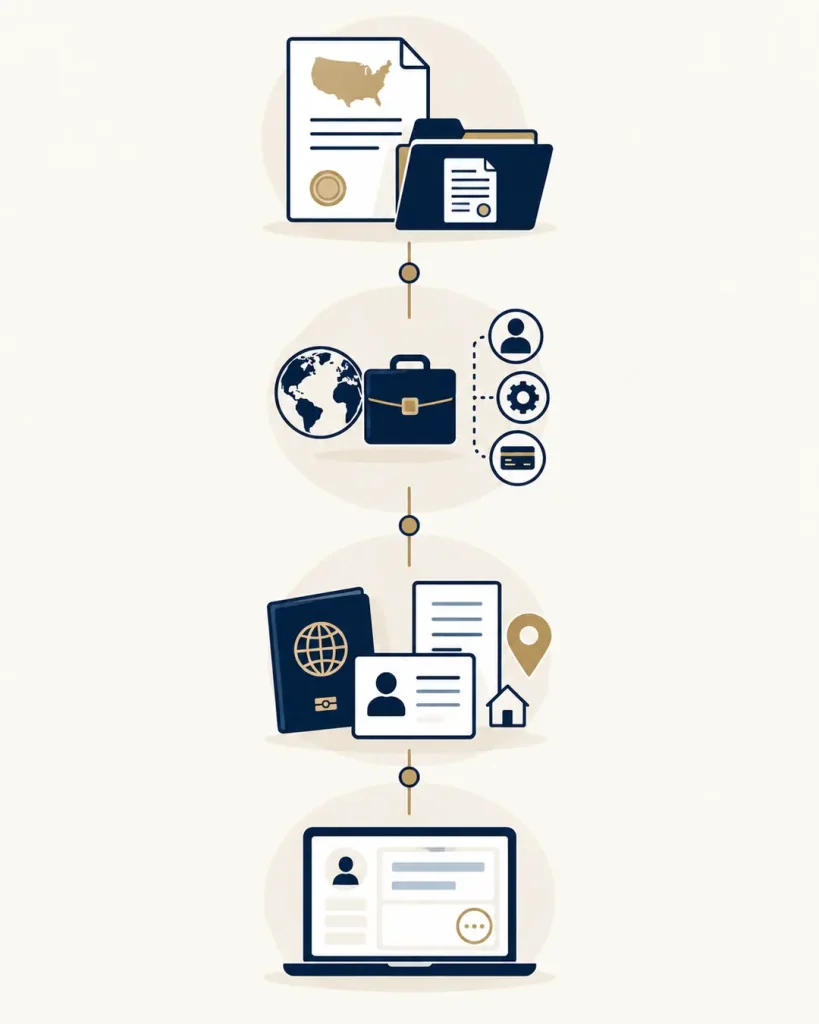
Four different decisions are often compressed into one:
- LLC ownership: A non-US person can generally own a US LLC.
- Application eligibility: The chosen provider must support the company type, owner’s residence, industry and intended activity.
- Verification: The company and owners must provide acceptable, consistent documentation and information.
- Final approval: The provider applies its own risk and compliance criteria and can request more information or decline the application.
Passing the first gate does not guarantee the fourth. Under FinCEN’s current framework, covered institutions identify customers, understand the relationship’s nature and purpose, and identify and verify relevant beneficial owners when a legal-entity customer first opens an account. Providers may impose stricter product rules.
What Do Non-Resident LLC Owners Usually Need?
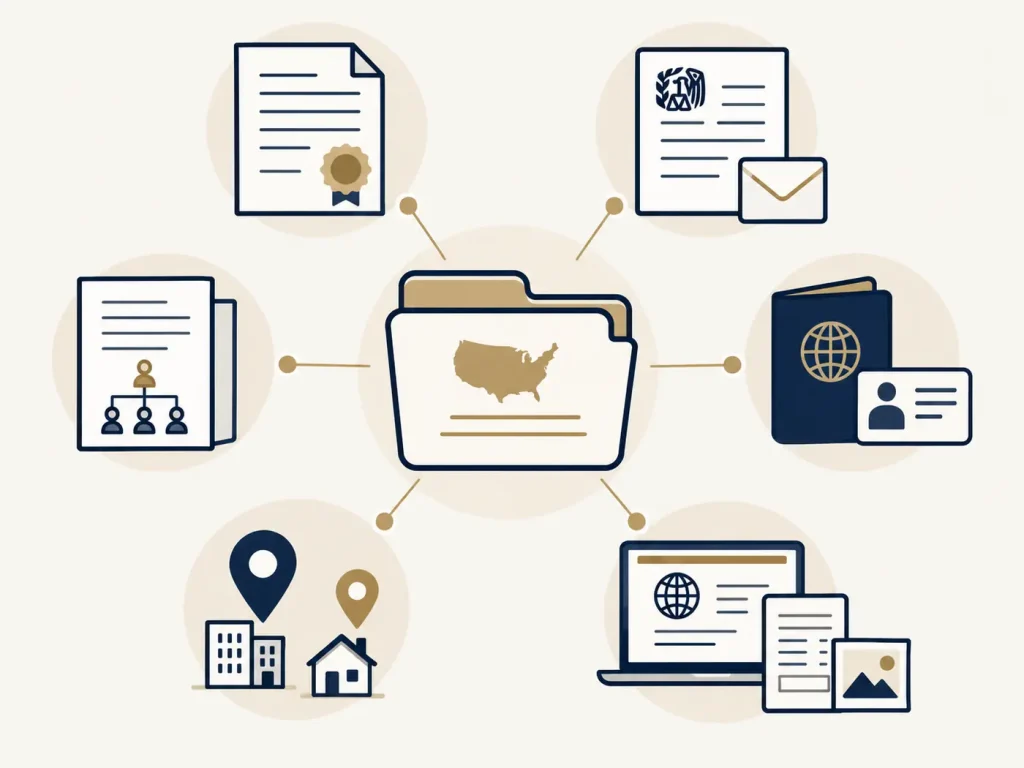
Requirements vary, but a foreign-owned Wyoming LLC should normally be prepared across six categories. The same framework is useful for other US LLCs.
| Category | Commonly requested information or evidence |
|---|---|
| LLC | State-filed formation document |
| Federal business ID | EIN and accepted IRS evidence |
| Governance and ownership | Operating Agreement, owners, controllers and percentages |
| Founder identity | Accepted government ID; sometimes a selfie or liveness check |
| Addresses | Relevant company addresses and owners’ residential addresses |
| Business activity | Description, website, account use, counterparties, volumes, corridors and source of funds |
Company documents and EIN evidence
Keep the LLC name and state record current and consistent. Providers commonly request the formation document, Operating Agreement and ownership or control information.
An EIN identifies the company, not its owner. The current IRS Form SS-4 instructions permit “foreign” or “N/A” on line 7b when the responsible party has no SSN or ITIN and is ineligible for one. An EIN can therefore be possible without one in qualifying cases, but a provider may still impose personal-ID rules.
A provider may also request CP 575, Letter 147C or other accepted IRS evidence. Use the EIN guide and seven-document guide for detailed checklists.
Founder identity and ownership
Expect checks on the applicant, controllers and owners above the provider’s threshold. A passport is common for international founders, but accepted ID varies. Complex ownership may require registers, parent records or resolutions. Residential addresses must be real and verifiable; nationality and residence are separate facts.
Business readiness
Explain what the company does and how it will use the account. The description should match its website, contracts, invoices and application answers.
Be ready to explain:
- products or services and target customers;
- website or professional online presence;
- expected payments, volumes and transaction sizes;
- customer and supplier countries;
- initial and ongoing source of funds; and
- contracts, invoices or other evidence if requested.
A pre-revenue company should disclose that status and provide a credible launch plan, founder funding and genuine pipeline evidence. Never invent customers, volumes or documents.
Two practical examples
These hypothetical examples show how your business model translates into expected account use.
SaaS business: A founder sells subscription software to small businesses. Explain which countries your customers are based in, how often they pay and how subscription revenue reaches the company account through your payment provider. Expected outgoing payments might include hosting, software tools and genuine contractor costs. Your product website, pricing and application should describe the same business. Before launch, clearly label transaction figures as estimates.
Consulting business: A remote consultant receives payments against client invoices. Explain the services provided, client countries, usual invoice amounts and payment frequency. Describe genuine business expenses, such as software subscriptions or subcontractor payments, and identify how the business is initially funded. Available contracts and invoices can support this explanation.
Which Address Does a Provider Need?
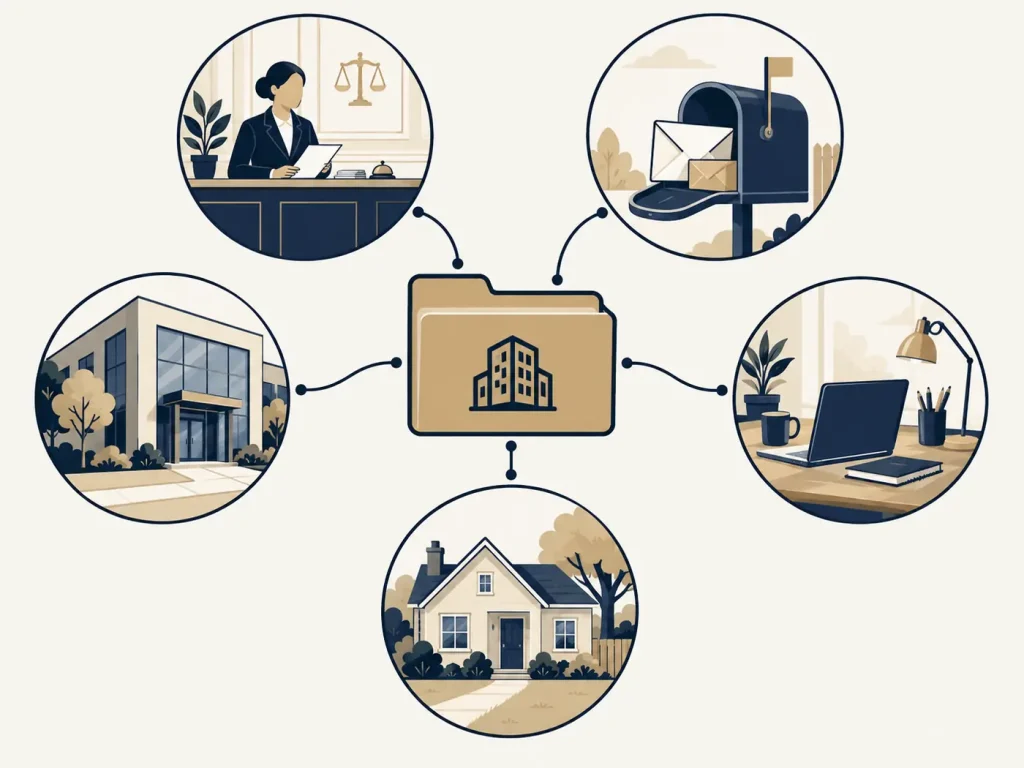
“Business address” is not one universal field.
- Registered Agent address: receives official state and legal correspondence.
- LLC mailing address: receives company mail.
- Principal or physical address: where the company is mainly managed or operated.
- Trading or operating address: where day-to-day work occurs.
- Owner residential address: where the individual lives.
The principal or trading address may be outside the US if the provider permits it. Describe the facts accurately. Do not present a Registered Agent address as the operating location. A virtual mailbox may handle mail without satisfying a physical-address rule. The US LLC address guide explains these distinctions.
How Do Mercury, Wise Business and Relay Differ?
These examples show why provider type and current rules matter. They are not rankings.
Mercury
Mercury is a fintech with services through partner banks. Eligible US companies founded globally may apply remotely. It requests formation and EIN evidence plus ID for a control person and owners with at least 25% ownership. It also requires existing or planned US operations and a US or international principal business address, which may be residential but not a Registered Agent, PO box or UPS box. Residence and industry restrictions apply. See the Mercury guide.
Mercury may request evidence of genuine U.S. business operations during the application or a later account review. Its official guidance lists examples such as a sale to a U.S.-based customer or an invoice or contract with a U.S.-based customer, partner or supplier. The evidence should reflect your actual business and match relevant account activity. Forming a U.S. LLC or having a Registered Agent address does not by itself demonstrate those operations. Review Mercury’s current eligibility requirements and U.S.-operations guidance before applying.
Wise Business
Wise Business supports international payments and currencies; it is not a traditional US bank account. Eligible users may obtain USD details, but Wise explains that these receive money into the Wise account rather than separate accounts.
Its US verification guidance requests the EIN, registered and physical trading addresses, activity, website, volumes, owners and controller. PO boxes, registration agencies, forwarding services and virtual addresses do not qualify as the trading address. Features depend on eligibility and address. See the Wise Business article.
Relay
Relay publishes that non-residents from many eligible countries can apply online. It is a fintech with services provided by Thread Bank. Its identity process verifies every listed beneficial owner and uses passports for non-US citizens. Additional company, income or source-of-funds information may be requested.
Confirm current country, address, entity and product rules. Where no clear rule exists, treat eligibility as an individual assessment.
Want personal guidance while preparing your LLC and banking information? Compare the Guided and Premium support options.
COMPARE GUIDED & PREMIUM SUPPORT
Common Application Gaps
Avoidable problems often arise when an application does not tell one coherent, verifiable story.
Common gaps include:
- conflicting names, owners or addresses;
- a vague business description;
- missing or unaccepted EIN evidence;
- an unsupported physical or residential address;
- no credible activity or pre-revenue plan;
- unclear source of funds;
- unrealistic volumes; or
- an unsupported residence, industry or business model.
Not sure whether your LLC documents, addresses and business details are ready for an application? Start the free Banking Self-Check before you apply.
A Practical Application Sequence
- Confirm eligibility. Check entity type, residence, industry, addresses and required functions.
- Prepare company documents. Use current formation, operating and ownership records.
- Prepare EIN evidence. Confirm the accepted IRS document.
- Prepare owner verification. Organize valid ID and residential-address evidence.
- Organize business information. Align the website, activity, counterparties, payments and source of funds.
- Check consistency. Compare names, dates, addresses, ownership and activity.
- Apply truthfully. Respond promptly with authentic, current evidence.
Banking Readiness support can help organize information and identify gaps. The provider makes every eligibility and approval decision.
Frequently Asked Questions
Possibly. Some providers accept online applications from supported countries; traditional banks may require a branch visit. Availability is applicant- and provider-specific.
Not universally. Some accept an international principal or trading address; others require a physical US business address or US connection. A verifiable residential address is normally required.
Use it for its statutory purpose. Do not assume it works as a principal, physical or trading address. Mercury excludes it from its principal-business-address field; other rules vary.
Not for every provider. Some verify eligible non-US owners with a passport; others require an SSN, ITIN or other personal number. An EIN does not replace identity verification.
An EIN and acceptable IRS evidence are commonly required. Mercury and Wise request an EIN for US businesses. Confirm the accepted document format.
Some providers do. Disclose planned operations, expected transactions, initial funding and genuine pipeline or contracts. Eligibility remains provider-specific.
No. An LLC establishes the entity. It does not guarantee acceptance of the owner, residence, industry, addresses, documents or risk profile.
Check Your Banking Readiness Before You Apply
A strong application starts with accurate company documents, verifiable addresses and a consistent business explanation. The free Banking Self-Check helps non-US founders identify potential gaps involving LLC documents, EIN evidence, addresses and business information. It does not predict or guarantee approval.
Still planning your Wyoming LLC and want to prepare it yourself?
The €59 eBook + DIY Toolkit guides you through formation, EIN, banking preparation and ongoing obligations. If you switch to one of our three formation packages before your Wyoming filing is submitted, we credit the full €59 eBook purchase price toward the package. The eBook stays yours.
Prefer personal support with formation and banking preparation?
Compare Guided Setup and Premium Launch. Both include Wyoming LLC formation, EIN support and structured banking preparation. Premium adds closer application preparation, a review of application information where possible, and payment-provider orientation.
Opening a US business account does not by itself change the owner’s tax residence or make company income tax-free. Tax and reporting consequences depend on the facts and relevant jurisdictions.

Sources and Freshness
Information last verified: September 2026.
Mercury eligibility and U.S.-operations guidance checked: October 5, 2026.
Provider policies, supported countries, documents and features can change. Check current rules before applying.
- IRS Instructions for Form SS-4
- FinCEN Customer Due Diligence Final Rule
- Mercury: FAQ, document requirements, eligibility requirements and U.S.-operations verification.
- Wise Business verification, US business verification and Wise Account explanation
- Relay’s non-resident guide and identity-verification requirements
Bosse LLC provides practical setup support and administrative guidance only. We do not provide legal, tax, accounting or regulated financial advice. Government, bank, fintech and payment provider approvals cannot be guaranteed.